The Pie is a Lie: ➊ Apple Pie!
Apple Pie is the teacher in the 1st post in the series asserting that the pie is a lie.


Yum. Pie.
Dessert fruit pies—sweet pastries with flaky crusts filled with fruit like apples or berries—are baked and eaten in Europe, the Americas, Australia and New Zealand. Before fruit pies, most pies were savory pies. The classic fruit pie for many is the apple pie which became popular in the 14th and 15th century. In America the traditional pie at Thanksgiving is the pumpkin pie—pumpkins are berries, right? If need be, use your imagination or your empathy. I'll continue, assuming we all understand this:
Yum. Pie. That means I think it tastes good.
― Yogi Berra
What was apple pie like in 1381? As shown in this pie description by Food52, the early English apple pie was made without adding sugar.
Tak gode Applys and gode Spryeis and Figys and reyfons and Perys and wan they are wel ybrayed co-lourd wyth Safron wel and do yt in a cofyn [pastry casing] and do yt forth to bake well.
The Dutch later added the lattice crust.
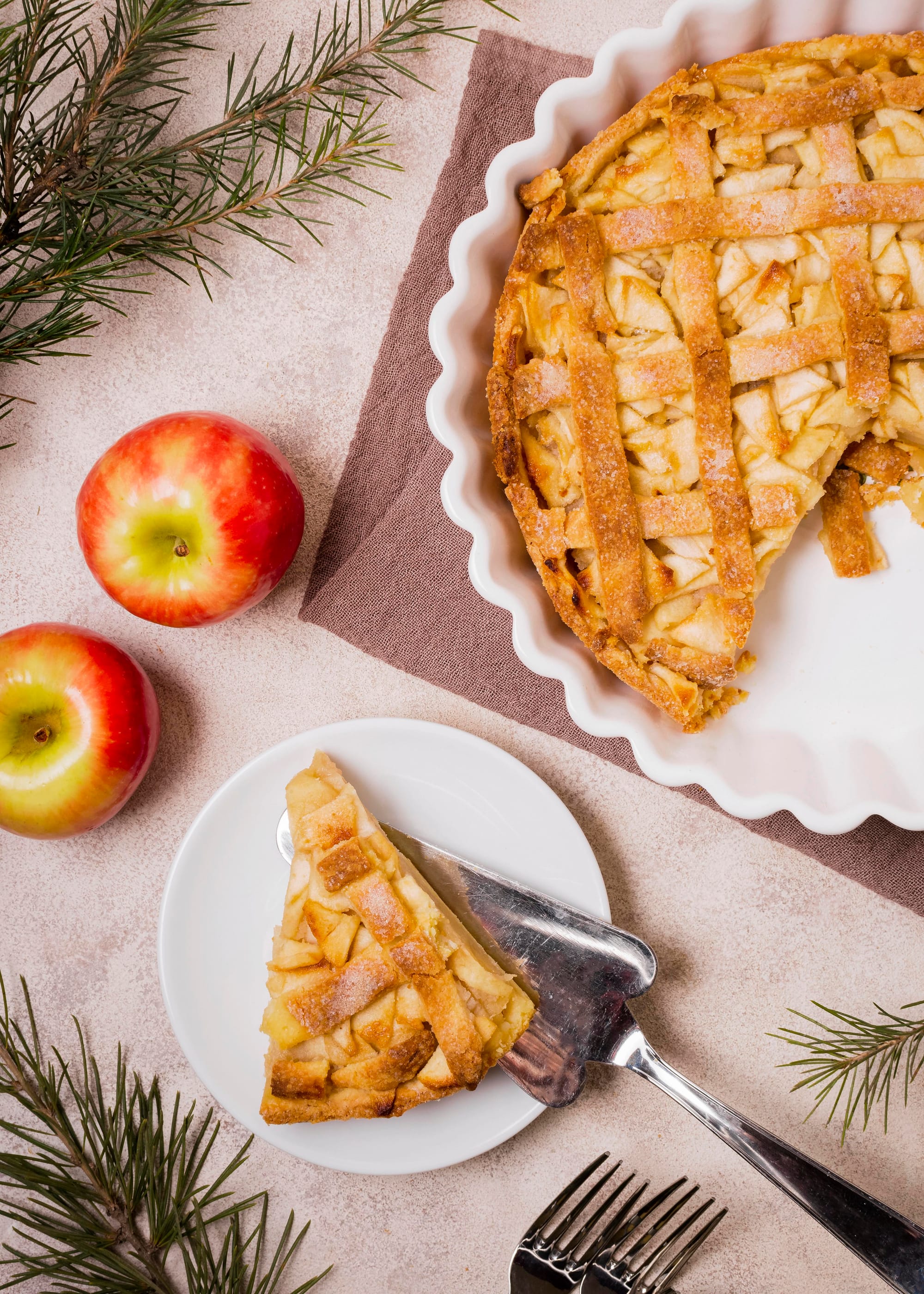
A baked round apple pie is a treat that can be divided into multiple pieces by cutting across the center of the pie at different angles, like petals of a flower, breaking through the golden latticed crust. It also can be cut from center to an edge at least two times and a served portion is that pie desert in between adjacent cuts, the wedge. The piece is called a slice.
Stories
Let's look at some little stories and learn about the goodness of pie and the problem with the limitations of the "pie tin".
The hostess puts her cup down on the little tea table between you and her. She jumps up. and with big eyes and a big smile she asks, "Would you like some pie?" You nod with a small timid smile. She rushes off to the kitchen and comes back with a huge slice of apple pie! Huge! Golden, latticed crust. Warm apple filling. You cannot help but have a big smile yourself. The words "Thank you." leave your mouth, yet remain in your core. You feel welcome here.
If the hostess serves you a big slice of the apple pie she keeps in the kitchen, well, for many of us, that is a good thing. More food, more enjoyment and more of that feeling of welcome. Kindness opens doors, including doors to fruitful dialogue. Both parties gained in big smiles, perhaps more than the joy of eating pie.
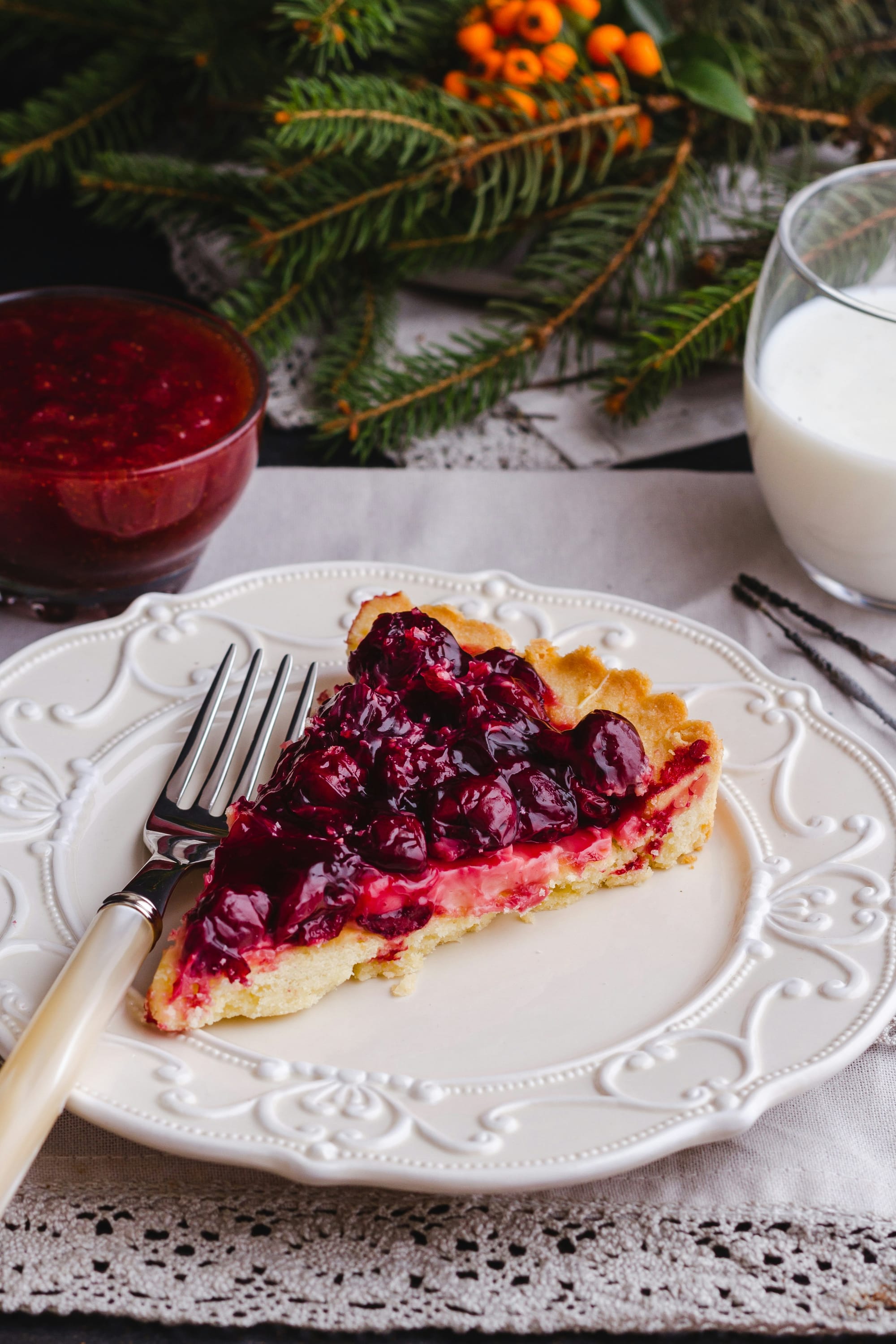
When the class comes back from lunch, Teacher brings in a big cherry pie from home to share with students. Perfect size, I think. Teacher divides the pie into just the right number of slices for the students, himself, and the helpers.
I am one of the students. I am able to enjoy this gift.
The pieces of the pie are all about the same, except mine is noticeably larger than the others. I find this concerning. If the intent is to give each person the same size, then why is mine bigger? Is this favoritism? A mistake? Should I say something? How can I enjoy this pie now?
I'm going to get beat up. I'm going to get beat up. I just know it.
The others might feel that the teacher must follow the pie rule: Slices must be equal. Or some rule I don't understand. Some will be waiting for me after class, wanting to harm me. I just know it. I am afraid.
Teacher says that I get the larger piece for coming in early to clean the room. He had promised a reward. The others applaud. Perhaps truly.
I timidly take a small bite of the tip of my slice.
Aunt Ethel said to little Beatrice that she may have a second piece of pie, to which Beatrice replied, "Oh, I would be pleased to have a second piece of pie! If I may." And Ethel served the slice.
After a bit of interesting conversation between the two on the ontology of price theory, Aunt Ethel said, in a mock cry, "Oh, my dear, you have eaten your slice of pie. I will get you another." To that, Beatrice, replied, "Oh, no, Auntie. I don't want any more pie. I am full."
Aunt Ethel was at first a little startled (even a little hurt) at this. But after a moment of thought the response did make sense. Even so, she did not feel like talking about the metaphysics of microeconomics any more that afternoon.
Coincidentally, in an upcoming sister post we see that—in the microeconomics view—the pie is a lie.
Peeking at those stories
What can we learn from these little tales?
- People perceive the pie as a good thing.
- Receiving a slice as a gift is a good thing.
- People have feelings about what is right concerning the size of the slice.
- Bigger is better; more is better. Up to a point.
In the first story you didn't know how many baked pies were in the kitchen and how many more were being prepared or if your slice was the last of it for a while.
In the second story, the protagonist saw there is clearly a finite amount of pie.
And there is more to the second story. Knowing there is a fixed-size fruit pie impacts how we think about the size of the gifts of pie. Wishing that a larger pie pan was used does not work.

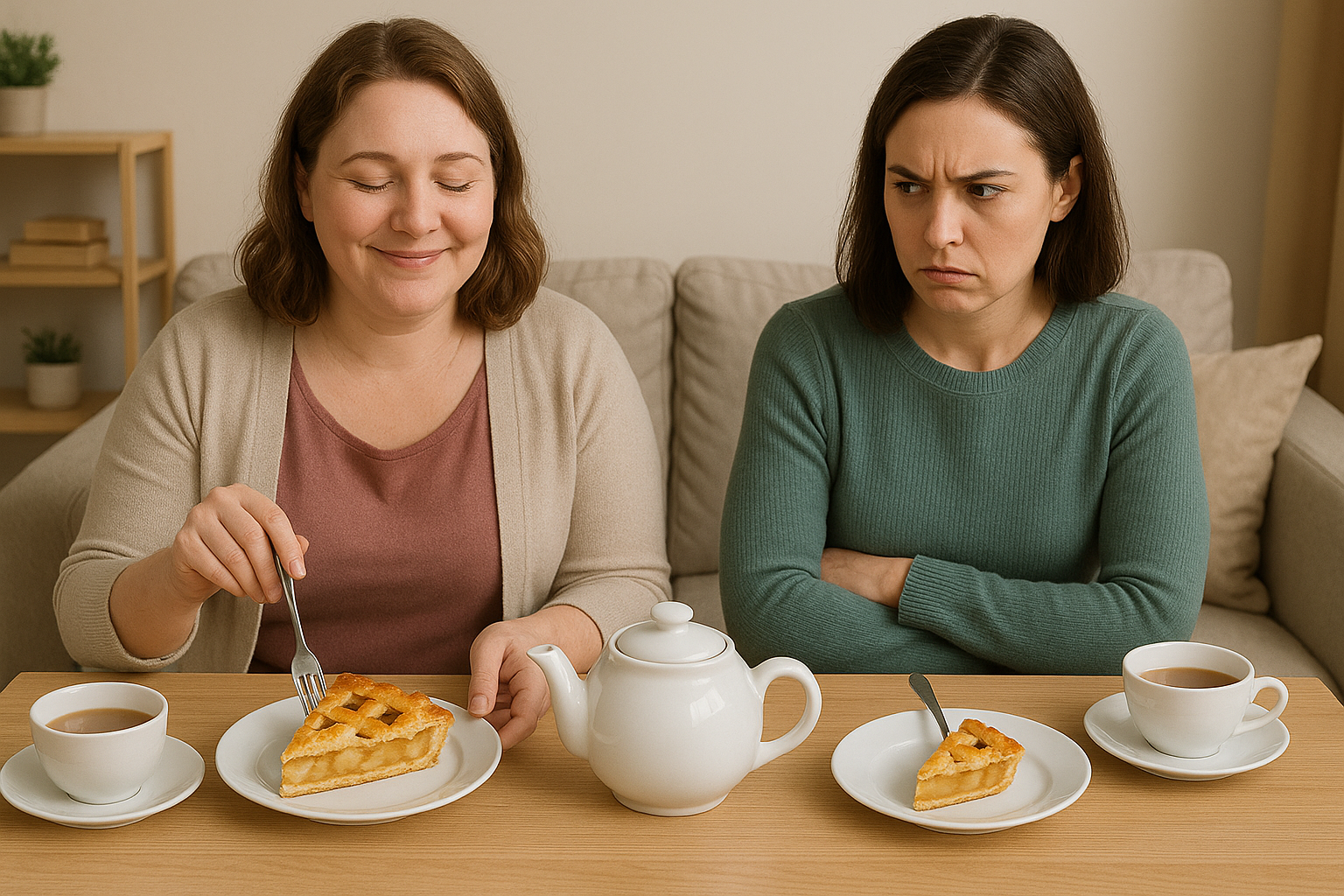
Even more, sometimes I look not at the gift given to me, but instead I compare it to the size of the one next to me. This might even apply when the size of the apple pie is not fixed, somehow. This can happen even when the gift given to me, my slice, is just the right size for me! Do you feel that way sometimes? Maybe you know someone who gets upset when her neighbor gets more than she. Are you the envious woman who has trouble enjoying her slice because she is distracted by the size of the slice for another. We can see this in this photo of Caritas and Invidia below showing an exaggerated difference.
This envy can become covetousness - we don't just want what our neighbor has, we want to take what is theirs. Why? Most often, it is because we see the pie size as fixed. We don't just want the same amount of pie, we want their piece taken away and given to us. That might even be jealousy, if we think that the extra actually belongs to us. Sadly, this can escalate to malice where we also want harm to befall the other. And even to spite or vindictiveness, where we would gladly be the agent of that harm. Shudder. I don't think there is a need to move along that path.
Consider Caritas and Invidia pictured above. Caritas, so named for charity, love and grace, is not smug or condescending, but is seeing abundance, grateful for what the hostess gave her. However, Invidia (envy) is fixated on comparison, perhaps seeing the whole tea party as a limited resource rather than a gift. Caritas doesn't see the envy because she does not see the world in a comparative lens. Her obliviousness is genuine gratitude.
However, I am not content with that. How does Invidia communicate to Caritas her pain when Caritas doesn't even see the zero-sum pie chart in Invidia's mind. How can Caritas grow to both enjoy bounty and notice it is a time to listen? Whichever is like me, can I do more in fruitful dialogue?
The third story hammered home that there are diminishing returns; more is not always better. Feelings can get involved here. We will address more of this outside of this series where we learn about giving.
The pie is good. Receiving a gift slice is good. More is better, up to a point. Receiving gifts can lead to envy and even jealousy.
The stuff of a pie is good stuff. Remember that, as we together explore this topic here at Mouth Fruit, look at the pie in this post and in sister posts.
Conclusion
Freshly baked apple pie is hot. It can bring forth many emotions. Let's take those emotions and arm ourselves as we move forward in understanding the logic behind the bold assertion that the pie is a lie.
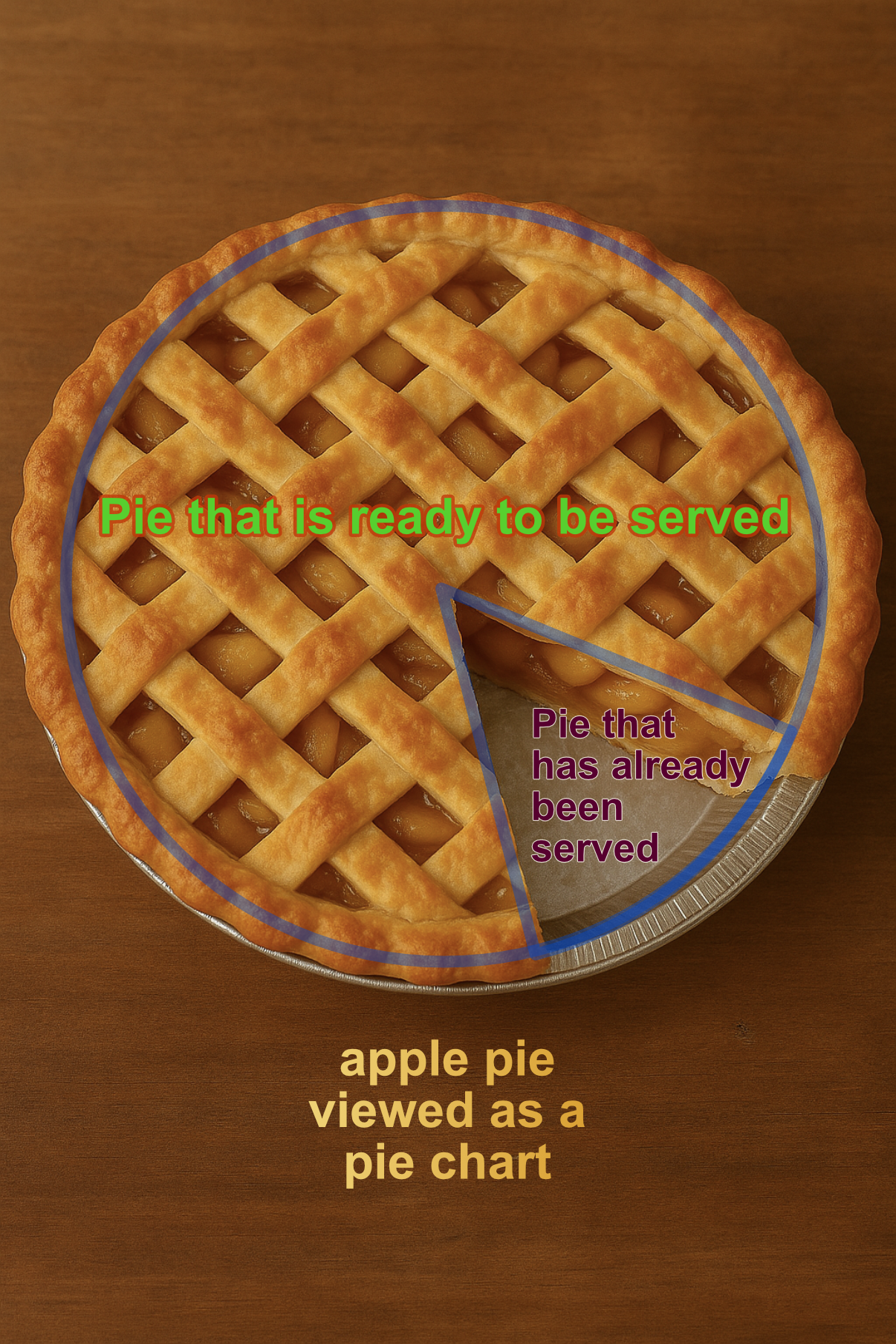
It is more than these emotions of the served pie, it includes the cognitive bias of a pie chart as shown in Mouth Fruit's The Pie is a Lie: ➋ Pie Charts.
When I generalize the fixedness of the pie to the world I see, I take a false step. I fall into the zero-sum mindset, one of the two zero-sum areas of study described in the upcoming The Pie is a Lie: ➌ What's that Zero-Sum Stuff?
Some Important Questions
Can we allow a rhubarb pie to be called a fruit pie? I guess pecan pies don't make the grade. Same with chocolate pies. Unless chocolate is a fruit. Does it matter?
How can I use a slice of pie to create a setting that enables fruitful dialogue? Ideas?
Are you an inventor? Is there a way to make a pie pan that can be expanded to larger sizes? Round pie pan that goes on forever?
What feelings rise up in thinking about pie? Comparing slices of pie?
Do you ever feel guilty about the size of your slice of the pie?
Do you prefer your apple pie à la Mode (with ice cream) or with sharp cheddar? Perhaps Wallace would prefer Wensleydale.
Did you know this can apply to other pies?