Tapa for Fruitful Dialogue
An introduction to the language Tapa
Tapa is a useful language for fruitful dialogue.
What is Fruitful Dialogue?
Fruitful dialogue, as used by Mouth Fruit, is discourse, formal or informal, where things have improved. That is, things are better after even considering the cost of the discourse. This is communication among some persons, but especially between two persons, each anywhere. This type of dialogue brings peace and prosperity.
Tapa is Crafted
Tapa is an invented language, as are Esperanto and Elvish. An invented language is often called a conlang, a constructed language. Conlangers are the developers of conlangs. Tapa has dreams and the developers embrace what Tapa dreams.
Conlangers tend to classify conlangs into categories. One is an experimental language where language features are tested and explored. Another is the aux language. The auxiliary language is useful to humans sometimes in specialized ways but more commonly in general ways, a language that enables communication among people of the world in a desirable way.
Tapa is an auxiliary language. In development it might express itself as an experimental language, but bear this in mind: Tapa is useful.

Tapa is Fun
The name "Tapa" is fun.
Try saying the word "tapa". You might have hit it right on. Here is a hint for English speakers: Say TAH-pah in an excited and happy manner. Maybe add a small hint of DAH-pah. Surprise! Tapa! If you want, you might tone down the excitement for normal speech.
Want to hear it? Go to Google Translate and type tapa into the from box on the left. Select from Indonesian, Swahili, English, or Chinese (simplified). Then click the speaker button in the lower-left corner. Try others in that list. You can also try the top languages and see how they do: Chinese (Traditional), English, Spanish and Hindi.
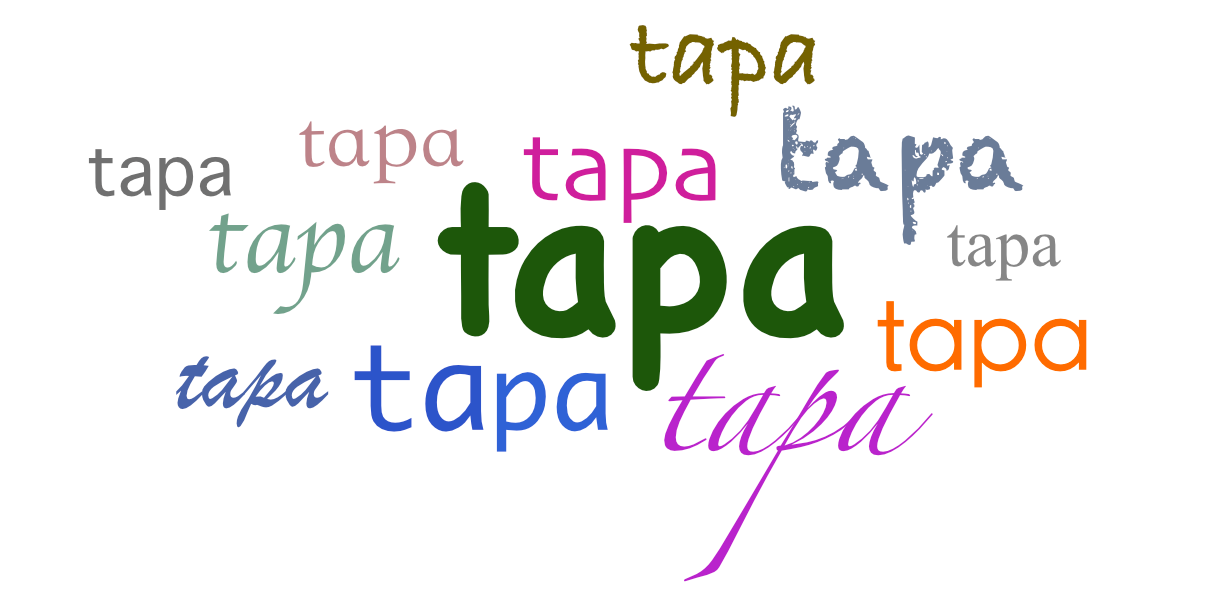
Tapa can be spelled with only three letters. It can be typed on most keyboards. In Morse code it is the simple sequence dah didah didahdahdit didah. Ok, some see that simplicity. In the Tapa glyphs it looks like this:
Though Tapa is useful in formal and serious communication, one should not be surprised to find a word or phrase in that language that can sound whimsical such as "abadaba du", reminding us of Yogi Bear, helping us keep to the nature of that phrase, perhaps acting as a memory aid for the Tapa beginner.

The Tapa word "tapa" is not a borrowed or loaned word, but "tapa" does have meanings in other languages that remind us of some nice things about Tapa. Hmm. Know any examples of what "tapa" means in other languages?
Tapa has Dreams
Tapa dreams of having some really cool features and wondrous characteristics. As the initial crafter, as I recognize those dreams, I want to embrace them and set up goals to meet them the best I can.

What are the dreams? I will share them in another post.