Mika Digits and Simple Numbers
Mix digits, spaces and a decimal point to make simple numerals in Mika.


Numbers, Said Plainly
Every language decides how it handles numbers. English says twelve but writes 12. English says fifteen hundred (or one thousand five hundred depending on mood) and writes the same quantity as 1,500 or 1500. In French, that is 1.500. The comma is a decimal point in half the world and a thousands separator in the other half. It is nobody's fault.
Mika minimizes this confusion. This first post is on how it handles numbers. Here we cover the ordinary parts — how a number is written, spelled, and said — almost all of it borrowed.
One idea runs underneath everything here: writing a number in digits, spelling it in words, and saying it aloud are three faces of one system, not three separate skills. Each matching piece of a Mika number has two shapes you write and a shape you say. Every feature comes with three faces at once.

Ten names, two facts each
Mika has ten digit names, one per digit, each a single open syllable (a consonant plus a vowel). Written, they are the same 0–9 most of the world uses. Said, they are the words below — and the words are not arbitrary. Each one carries two recoverable facts about its digit, so a name half-heard can often still be reconstructed.
- The onset's voicing tells you parity. Voiceless onset → even digit; voiced onset → odd digit.
- The vowel pairs the digits. Each vowel names two digits, five apart: e is 0 and 5, i is 1 and 6, a is 2 and 7, o is 3 and 8, u is 4 and 9.
| Digit | Name | Even/odd | Low/high half |
|---|---|---|---|
| 0 | se | even | 0–4 |
| 1 | bi | odd | 0–4 |
| 2 | ta | even | 0–4 |
| 3 | bo | odd | 0–4 |
| 4 | tu | even | 0–4 |
| 5 | be | odd | 5–9 |
| 6 | ki | even | 5–9 |
| 7 | ba | odd | 5–9 |
| 8 | ko | even | 5–9 |
| 9 | gu | odd | 5–9 |
If a listener catches that a digit was voiced and back but misses the vowel, they already know it was one of 5, 7, 9 — odd, high half. That is redundancy doing useful work, the same instinct behind NATO's alpha-bravo-charlie, except here the redundancy is built into the structure of the names rather than bolted on.
A small consequence: adding five to any number leaves its last spoken vowel unchanged, since a units digit and that digit plus five always share a vowel — ta (2) and ba (7), bo (3) and ko (8). Likewise, adding one swaps consonant voice.
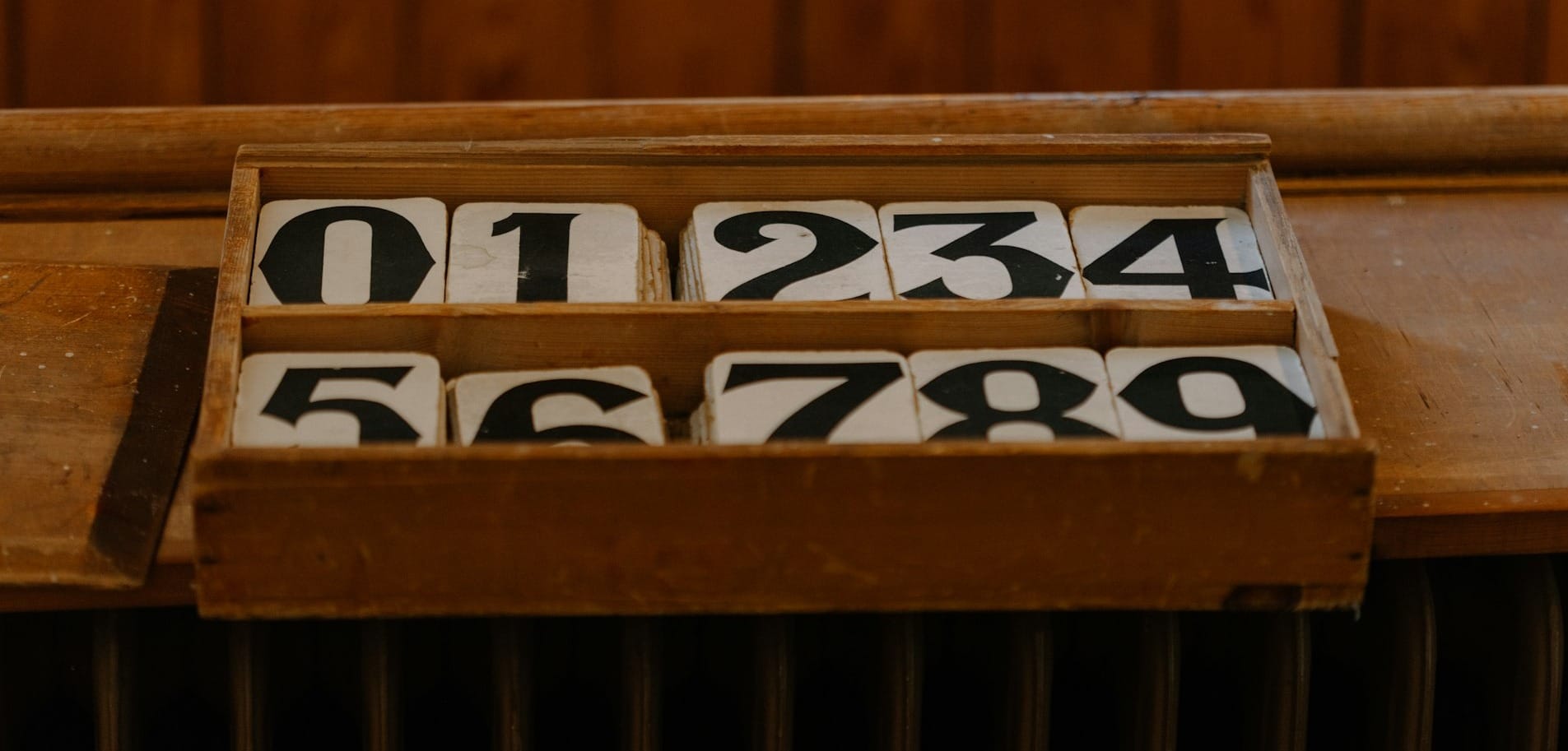
A thing worth saying plainly: a digit names a symbol, not a quantity. ba is the name of the glyph 7, the way aitch is the name of the letter h. This keeps "Model number 128XL" and "I have seven sheep" from needing two different vocabularies.
Where a digit sits is what it's worth
Mika reads strings of digits the way nearly everyone does: a digit's place tells you its size. The 2 in 200 is worth more than the 2 in 20, which is worth more than the 2 in 2. Same symbol, three values, sorted out entirely by position. (The technical name for this is a positional decimal place-value system — positional because place carries value, decimal because there are ten digits.)
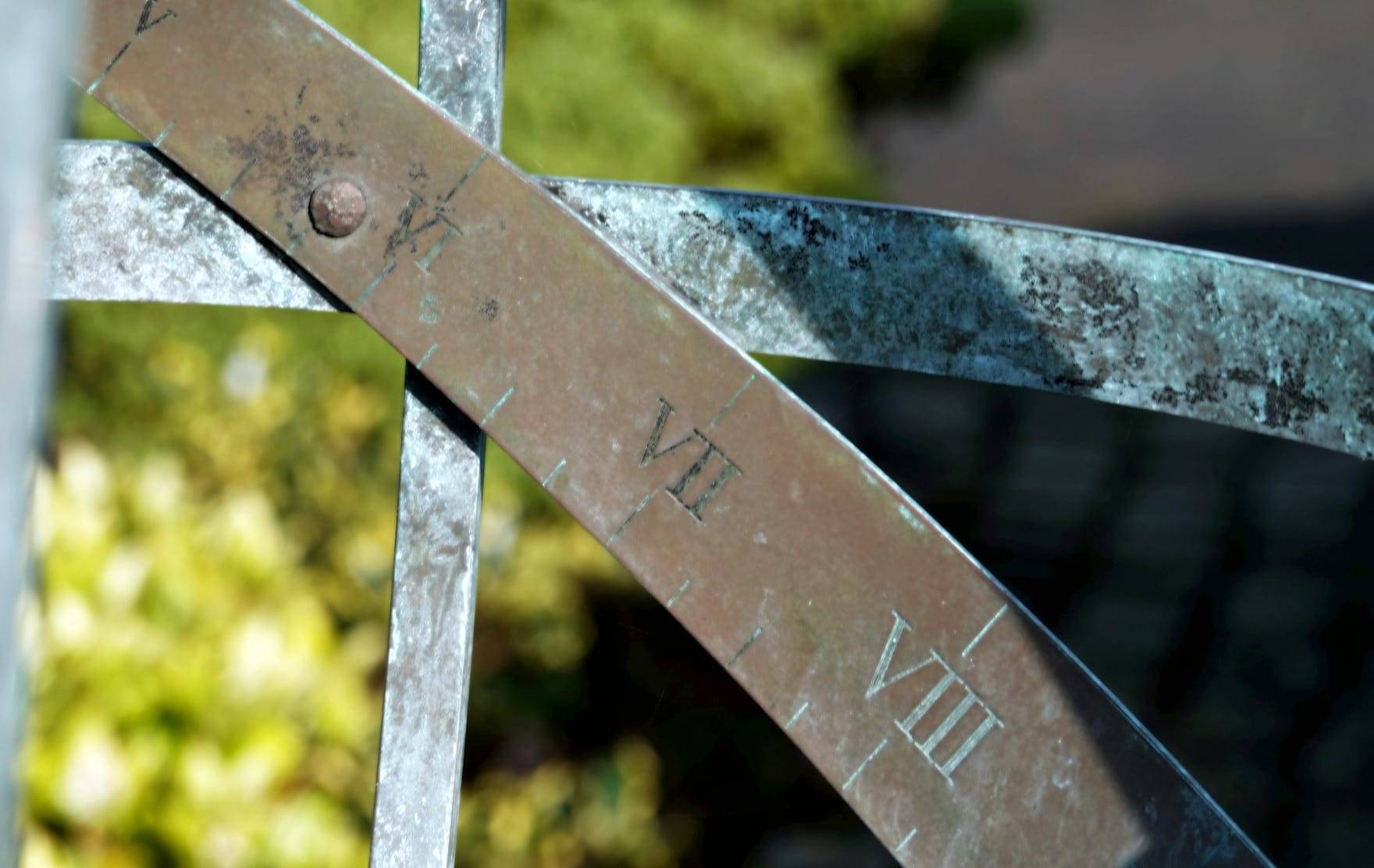
Mika's main decision here was to not be clever. Many of the ways humans have written numbers don't do this. Roman numerals don't — the V in VII is five wherever it stands; there is no "place." Mika steals from the best.
The point that isn't a digit
The decimal point is written . and said an. So 1.5 is bi an be — "one, point, five." an is deliberately not built like a digit: every digit name starts with a consonant, but an starts with a vowel. In a stream of consonant-initial digit syllables, the one vowel-initial syllable can only be the point. It is hard to mishear it as a digit.
an is only said when digits follows it. An integer needs no spoken point (or written) — 2 is just ta, never ta an. The point appears exactly when there are fractional digits to introduce. And when there is a fractional part with nothing whole in front of it, the zero is written and said anyway: 0.5 is se an be, not a bare an be. A lonely point is too easy to lose; the leading zero holds its place.

Where the spaces go (and where they don't)
For long numbers Mika follows the conventions of the International System of Units — the guide that quietly govern how numbers look in technical writing the world over. The convenient thing is that they're written down in a document anyone can read for free: the SI Brochure, published by the BIPM (the International Bureau of Weights and Measures). The same conventions are codified in the formal standard ISO 80000-1; the two are kept consistent. Two of these rules are worth lifting whole.
First: the separator between groups of digits is a space — never a comma, never a point. The comma-versus-point fight cannot be won; both marks mean opposite things in different countries. Mika sidesteps it by using neither for grouping. (For the decimal mark itself, the standard permits either a comma or a point and only asks that you stay consistent; Mika picks the point.)
Digits group in threes, counted outward from the point in both directions:
12 347.890 12In print this is a thin space, narrower than a word space, so the number reads as one object rather than several. It is purely a courtesy to the eye — and a practical one, since when fancy typesetting is too much trouble you can just tap the space bar. Said aloud, the space is nothing, or at most a small breath of phrasing. Mika groups in threes, a Western habit, rather than in ten-thousands the way Chinese, Japanese, and Korean do with 万. So, 12 345.678 is the Mika way.

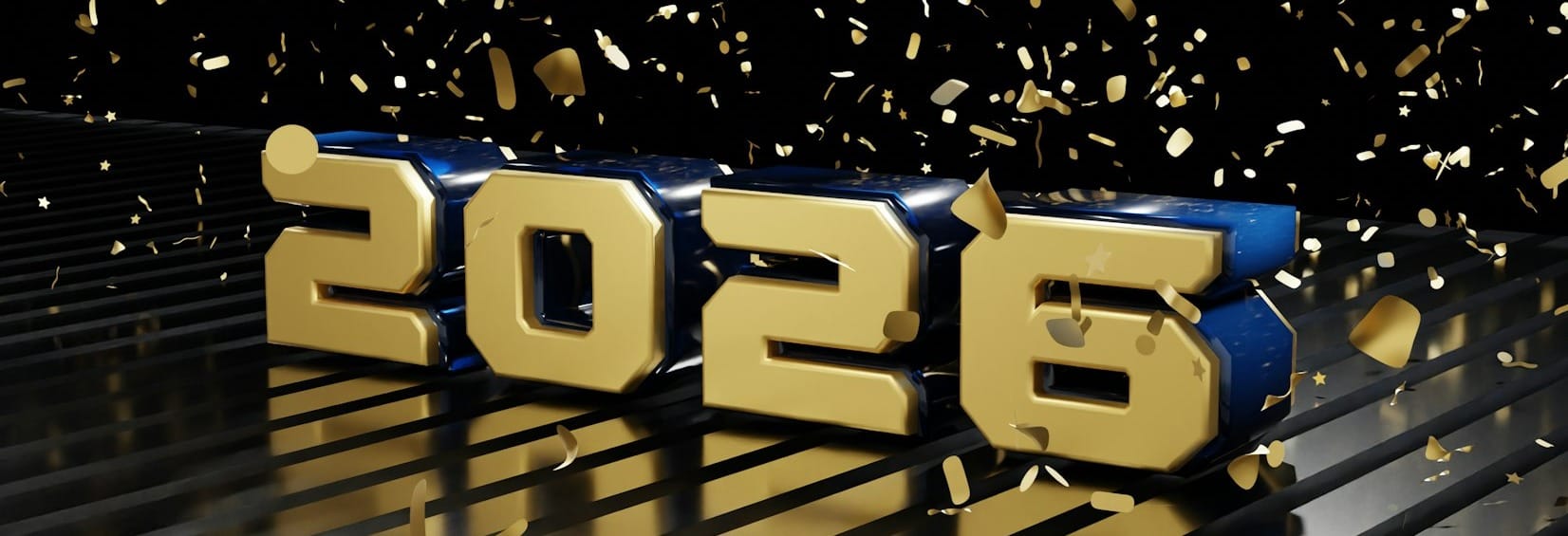
Second: short numbers don't get grouped at all. ISO 80000-1 makes the space optional for a four-digit integer, so a year is written solid:
2026, not2 026
The same goes for 1500, or anything four digits long with no fractional tail. The thin space earns its keep starting at five digits to the left (12 345), or three to the right. The clean cutoff: group at five digits, leave four-digit integers solid.
Saying a whole number
Because the written and spoken forms were built to match, reading a Mika number aloud is almost mechanical: say the digits in order, say an if and when you reach the point, say the digits after it. No "thousand," no "hundred," no "and." A flat string.
2026→ ta se ta ki — "two, zero, two, six"1.5→ bi an be — "one, point, five"0.5→ se an be — "zero, point, five"2.09→ ta an se gu — "two, point, zero, nine"
This looks almost too plain, and that plainness is the point. The high-reliability radio traditions — aviation, maritime, the ITU — long ago found that the safest way to read a number over a noisy channel is as separate digits, not as "twelve thousand three hundred." Scale-words force the listener to hold the whole number in mind and do arithmetic to place each digit; a flat digit string lets them write it down as it arrives. Mika simply makes the reliable way the only way for transcription. The thin spaces on the page are for the eye; in the mouth they become, at most, a tiny pause, both gifts. Nothing a listener has to decode.
That is the system: one set of agreeing pieces, two with a face you write and one with a face you say. There is more to the last. What's left is the music — how fast the digits run, where the voice rests, whether the pitch rises or falls. That is best tuned by ear, not decided at a desk, and I'd rather say these numbers aloud through Mika's own voice a few hundred times before fixing any of it. So: how to say a number well is coming. This was how to write, spell, and read one.
Next, the handful of places where Mika doesn't borrow but decides for itself: negative numbers that are numbers rather than subtractions, and big numbers that refuse big words. A third post will gather the wider design choices behind all of it.
Reference: the number-formatting conventions described here are set out in the SI Brochure, 9th edition, free from the BIPM at bipm.org/en/publications/si-brochure (direct PDF: SI-Brochure-9-EN.pdf). They are also codified in the formal standard ISO 80000-1.